
Measurement · 4 min read
How to measure creator-driven app installs and acquisition cost
Measure a creator campaign by connecting a defined content investment to observed acquisition and product outcomes over an explicit period. Keep views, attributed installs, activated users and revenue separate. Attribution describes credited activity; incrementality asks what would have happened without the campaign.
Define the question before selecting a metric
A report should support a decision. If the decision is whether a concept deserves another production round, attention and qualified response may help. If the decision is whether to expand acquisition spend, installs alone are insufficient: examine activation, retention, cost and the relevant revenue cohort.
Write down the event definitions. A download, a first launch, an account registration and a trial start are not interchangeable. Agree which event represents activation for the app, and keep that definition consistent across reports. Changes in tracking or product behaviour should be visible alongside the numbers.
Use a consistent campaign naming system
Give each campaign, creator and concept a stable identifier. Record platform, publication date, account, destination and version. Apply the identifiers consistently to the links and reports your tools actually support. Keep a record of changed destinations so later results can be interpreted.
Apple’s campaign links provide a way to connect marketing links with reporting in App Store Connect Analytics. Use the parameters and reporting rules in Apple’s documentation. A campaign link is not a complete record of every impression-to-install journey, and it should not be presented as person-level certainty.
Calculate cost using a declared scope
Cost per attributed install equals the included campaign cost divided by the attributed installs in the chosen reporting window. Cost per activated user uses activated users as the denominator. State what the numerator includes: creator fees, production, management and paid distribution can materially change the interpretation.
Do not divide by zero or replace missing attribution with a guessed denominator. Show the metric as unavailable when the underlying count is missing. A low install cost with weak activation can still be a poor acquisition outcome, while a higher install cost may be workable for a cohort that retains and converts.
Keep revenue windows and cohorts aligned
Return on ad spend compares attributed revenue with ad spend. A broader program-return calculation may include production and management costs, but it should be named and defined accordingly. Do not label a calculation ROAS while quietly changing its cost basis between campaigns.
Compare cohorts at the same age. A group acquired recently has had less time to convert or renew than an older group. Record whether revenue is gross or net and how refunds, taxes and store fees are handled. The purpose is a decision-ready comparison, not the largest possible headline number.
Distinguish attribution from incremental impact
An attribution system assigns credit according to its rules and observable signals. Incrementality asks whether an outcome would have happened without the marketing activity. Those questions can produce different answers. People already intending to install may still click a creator’s link.
Where the business decision warrants it, plan a controlled comparison with a suitable analyst. Define the populations, timing and outcome before starting, and account for overlapping campaigns and seasonal changes. If a robust comparison is not feasible, report attributed results honestly and leave the causal claim open.
Build a weekly report that leads to action
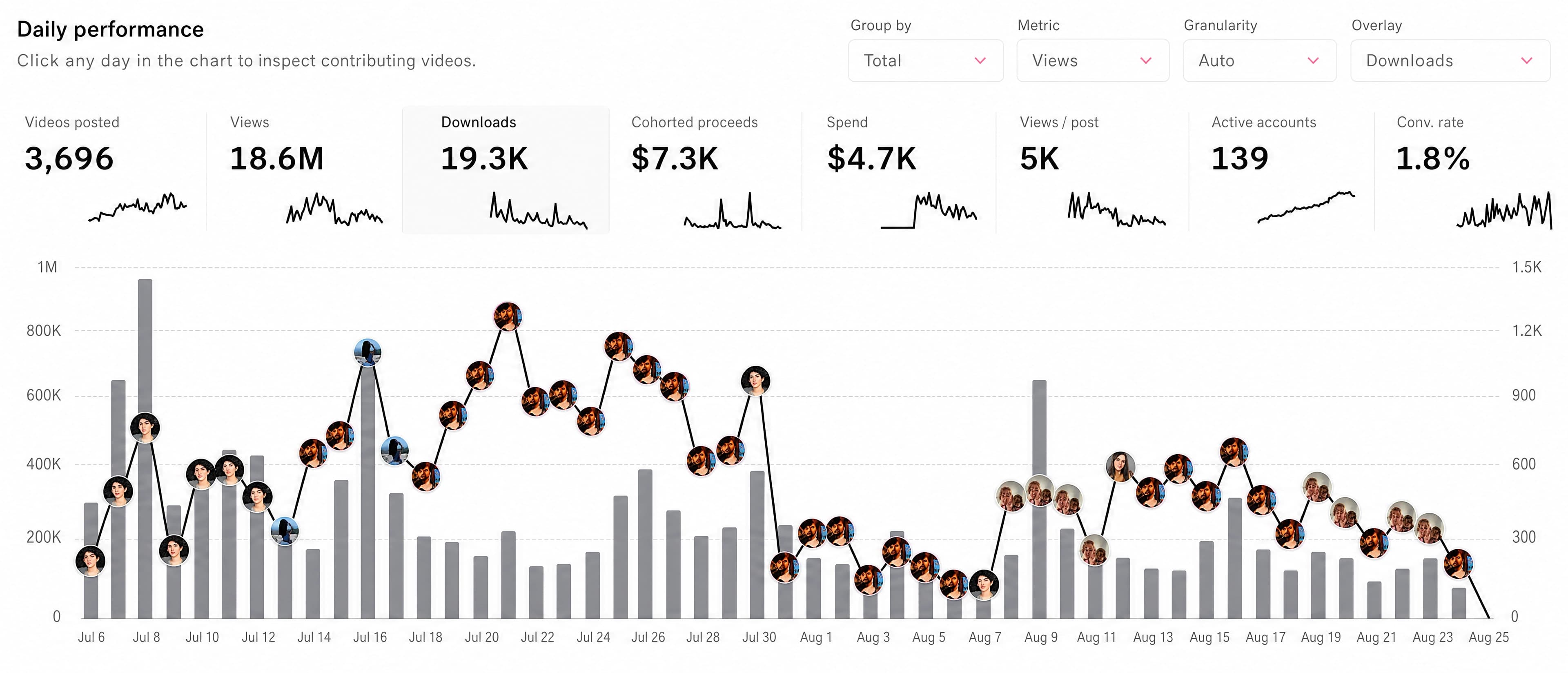
Show the reporting window, sources, delivered originals, live posts, observed reach, attributed acquisition and activation. Include total cost with its scope, and compare mature cohorts where possible. Add a short explanation of unavailable data, delayed reporting and any changed tracking definitions.
Finish each review with a concrete action and the evidence behind it. That might be fixing a broken link, improving a demonstration, testing a more relevant store page or continuing a promising concept. At Flash Studio, Volume is the reporting surface for the creator program; agree the available events and attribution definitions before using any dashboard number as a decision rule.
Common questions
Can every app install be attributed to a creator?
No. Privacy constraints, untracked searches, cross-device journeys and reporting rules can leave installs unattributed or grouped. State what your measurement observes and what it cannot establish.
What is a good cost per install?
There is no universal target. Evaluate cost against the app’s conversion, retention, monetisation and payback requirements, using comparable audiences and reporting windows.
Sources and further reading
Platform-specific guidance comes from the primary sources below. The operating recommendations are Flash Studio’s editorial guidance.
Put the next idea to work.
Flash Studio recruits creators, runs the content program and tracks downloads in Volume. Talk through the right starting point for your app.
Talk about your app ↗